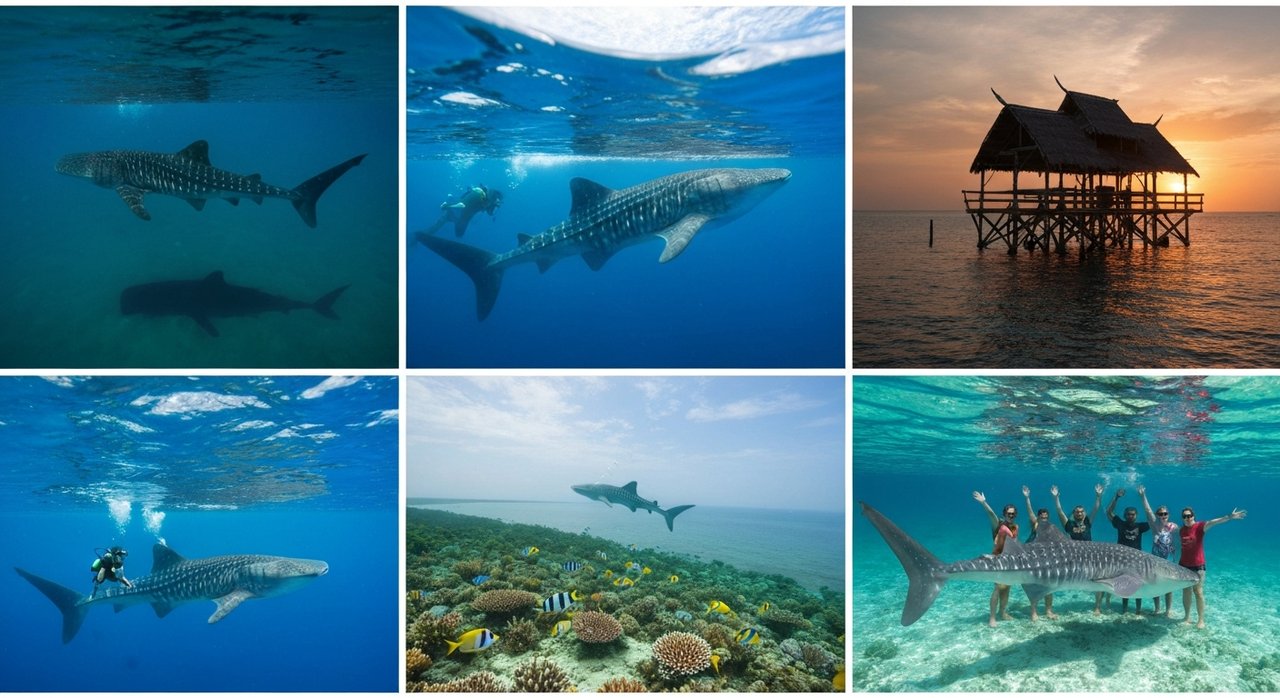
Nabire Whale Shark Gallery
Breathtaking moments from Cenderawasih Bay — the world’s most extraordinary whale shark encounters
Whale Shark Snorkeling
Cenderawasih Bay
Underwater Photography
Marine Life of Nabire
Tour Boats & Equipment
Happy Guests
Follow us on Instagram for daily whale shark moments from Cenderawasih Bay
Capture Your Whale Shark Moment
Every Nabire whale shark tour creates unforgettable photographic opportunities. Cenderawasih Bay’s crystal-clear waters, with visibility reaching 20–30 metres, provide ideal conditions for both amateur and professional underwater photography. The whale sharks here are habituated to human presence, allowing extended, close encounters unlike anywhere else in the world.
Our guides are experienced photographers themselves and will help position you for the best possible shots. We can recommend optimal camera settings for the available light conditions and guide you to the best vantage points around the bagan fishing platforms where whale sharks congregate.
We offer optional GoPro rental for guests who don’t have their own underwater camera equipment. Our photo packages include a curated selection of professional shots taken by our in-water guide, delivered digitally within 48 hours of your tour. These make perfect memories and are shareable directly to social media.
When photographing whale sharks, we ask all guests to follow our responsible photography guidelines: no flash photography (disorienting to whale sharks), maintain at least 3 metres distance, no drones within 30 metres of wildlife, and never position yourself directly in front of the animal’s mouth. These guidelines protect the whale sharks while still allowing extraordinary photography.
Explore More Nabire Whale Shark Experiences
Whale Shark Photography: What Makes Cenderawasih Bay Special
Cenderawasih Bay Marine National Park is widely regarded among underwater photographers as one of the premier whale shark photography destinations on Earth. Unlike the seasonal aggregations found in Mexico’s Yucatan Peninsula, the Philippines’ Oslob, or the Maldives, Nabire’s whale sharks are present year-round, congregating beneath traditional bagan fishing platforms in extraordinary numbers.
The unique feeding behavior of these whale sharks — hovering vertically to consume small fish and krill from the bagans — creates photography opportunities unavailable anywhere else. You can photograph whale sharks from above the water surface, at the waterline, and fully submerged, capturing three entirely distinct perspectives in a single session. The habituated nature of these animals means they do not flee from snorkellers, allowing sustained, calm, close-range photography.
Water clarity in Cenderawasih Bay consistently measures 15–25 metres visibility, with particularly excellent conditions between May and October during the dry season. The protected bay environment means minimal current and wave action, keeping images sharp and stable even for novice underwater photographers. Natural light penetration is ideal during morning sessions between 7am and 11am, producing the characteristic blue-on-blue whale shark shots seen in National Geographic-quality imagery.
Marine Life You’ll Photograph on Your Nabire Tour
While whale sharks (Rhincodon typus) are the undisputed highlight, Cenderawasih Bay offers exceptional diversity of marine subjects. Our tours regularly encounter manta rays gliding through the bay’s warm thermoclines, their wingspans reaching 5–6 metres. Sea turtles are resident in the bay year-round — both Green Turtles and Hawksbill Turtles — often photographed resting on the reef or surfacing for air.
The reef systems surrounding the bay are among the most biodiverse in the Coral Triangle, hosting over 200 species of hard and soft coral. Pygmy seahorses (Hippocampus bargibanti) can be found clinging to Muricella sea fans at around 18–25 metres depth — a favourite subject for macro photographers. Bumphead parrotfish schools, Napoleon wrasse, wobbegong sharks resting on sand patches, and seasonal schooling hammerheads round out the pelagic portfolio.
For bird and surface photography, the limestone karst islands and coastal areas around Nabire are home to endemic Papua bird species. Early morning boat transfers to the bagan platforms offer spectacular sunrise seascape photography opportunities with traditional Indonesian fishing boats silhouetted against the golden sky.
Underwater Camera Equipment Recommendations
For whale shark photography in Cenderawasih Bay, we recommend bringing wide-angle lens setups to capture the full scale of these 6–10 metre animals. A 10–17mm fisheye lens or equivalent is ideal for close-encounter shots. For reef photography, a 60mm macro lens will handle seahorses, nudibranchs, and ornate ghost pipefish with excellent detail resolution.
Mirrorless cameras in underwater housings (Nauticam and Ikelite are most common among our photography guests) produce outstanding results. For guests preferring compact setups, the Sony RX100 series or Canon G7X in a housing performs admirably. GoPro cameras — available for rental through us — capture the wide-angle whale shark moments effectively and are the most popular choice for first-time underwater photographers.
Strobe or video light use is permitted for reef photography but should be avoided entirely during whale shark encounters. The sudden illumination causes disorientation in these sensitive animals and is prohibited under our responsible whale shark interaction guidelines, which align with the WWF/IUCN Code of Conduct for whale shark tourism operators.
Frequently Asked Questions: Gallery & Photography Tours
Ready to Capture Your Whale Shark Story?
Book a photography-focused whale shark tour with Nabire’s most experienced guides. We’ll put you in the perfect position for shots you’ll treasure for life.
Book Your Photo Tour — Inquire Now📞 +62 811 380 9193 | ✉️ [email protected]